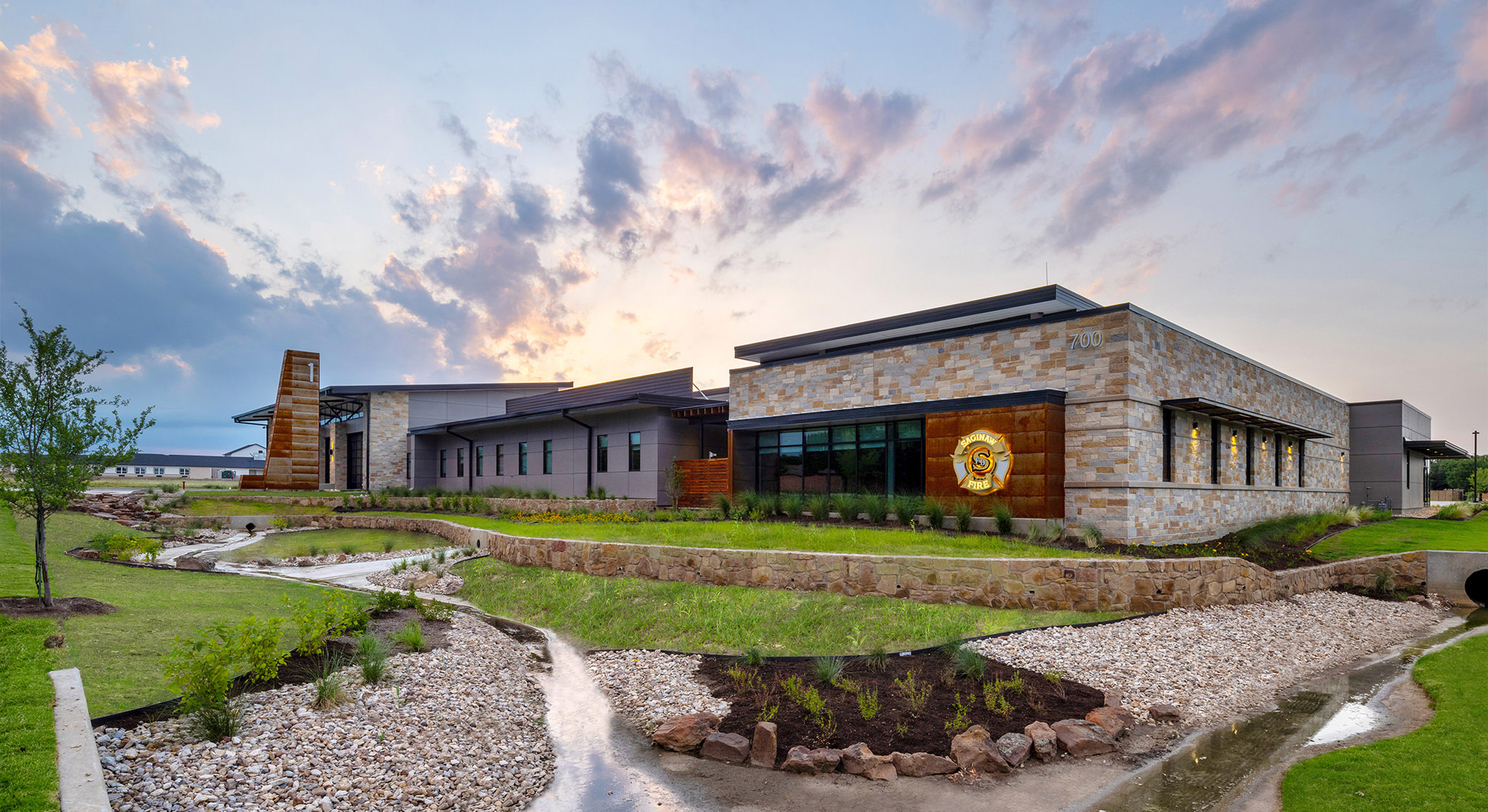
BRW Fire Station Design

Latest

GET THE MOST STATION FOR YOUR MONEY

For the last decade, governmental entities building fire stations have been able to choose from several different methods to award contracts.  While the many options offers some amount of flexibility, we have found that fire chiefs and city managers are primarily concerned with one issue: which method provides the most station for the money?

While different methods have their pros and cons, we have found–after working with more than 60 different fire departments–that the two methods which generally offer the best value to our clients are Construction Manager at Risk and Competitive Sealed Proposals.  Other methods to consider may include Design Build, Construction Manager Agent, Job Order Contracting (typically for repair and minor renovation) and Competitive Bidding (without consideration of qualifications).

COMPETITIVE SEALED PROPOSALS

Under the Competitive Sealed Proposals method, contracts are awarded based on which contractor’s proposal offers the “best value,” rather than simply the lowest price. In addition to cost, the request for proposal may require a variety of qualifications, including the construction firm’s history, relevant projects, project personnel and their resumes, schedules, and a financial statement.  The proposal evaluation criteria must be published with the Instruction to Proposers and are typically weighted by the various criteria.

In many cases, contractor expertise may outweigh the price when ranking responses. This approach is best used in a slow economy to take advantage of the competitive bidding environment, coupled with the ability to select the most qualified contractor.

The chief advantage of the CSP method is the ability to negotiate project scope and cost with the “best value” proposer.  If an agreement is not reached with the first selected proposer, negotiations are suspended and re-started with the second selected proposer and so on.  The main disadvantage is that the cost of the actual project isn’t known until the proposals are submitted.  But with careful cost estimating throughout the design phases by a design team with recent fire station experience, the issue of overbidding is minimized.

CONSTRUCTION MANAGER AT RISK

Under CMAR, the construction manager is typically selected at the same time as the architect. The benefit of this approach is that, as the architect is designing, the contractor is simultaneously reviewing the project for constructability and preparing cost estimates and schedules – all with an eye to keeping the project on budget and on schedule.

In an inflationary economy when the cost of building materials are volatile, it’s wise to have a contractor on board early so that they can, in concert with subcontractors, keep tabs on market fluctuations and prevent a short-term supply shortages from turning into massive cost overruns or missed deadlines.

One of the chief advantages of CMAR is that final pricing by subcontractors to establish or confirm the GMP (Guaranteed Maximum Price) should match previous CMAR pricing, thus reducing the anxiety of unknown cost on bid day.  (This approach is best used in a growing economy with inflation.)  The GMP may be set at the completion of the Design Development phase or midway through construction documents to “lock in” escalating cost, but this approach usually requires contingencies to cover undesigned elements and requires collaboration between the CMAR and design team to complete the documents within the set budget.

An occasional negative issue with this contracting approach is when the CMAR is too cautious in their early estimates and the deign team reduces the gross building area, it can be quite difficult to add gross area back in, if the project underbids. This risk can be combated by making good decisions early and sticking to them, while discussing realistic contingencies for project scope that isn’t designed.

Because of fluctuations in the economy, there is no one method that will work at all times for all projects.  We encourage fire chiefs to be involved in early discussions to examine the pros, cons, and nuances of the various construction delivery methods.

For a more in-depth discussion specific to your situation, please drop Gary DeVries and Ray Holliday a line at fire@brwarch.com.

DESIGNING FOR DISASTER

The Right Materials are Key to Hurricane-Resistant Fire Stations

Firehouses occupy a unique place in our communities–a haven of safety and preparedness, even when disaster strikes. That’s why ensuring that fire stations can withstand common natural disasters is a vital issue for architects.

In parts of Texas, that means constructing firehouses to withstand hurricane-force winds. While no building can be designed to be “hurricane-proof,” they can be constructed to resist a hurricane with only minimal damage.

To that end, Brown Reynolds Watford Architects teamed up with the Texas A&M University colleges of Engineering and Architecture to develop new methods and technologies to build fire stations that can resist hurricane-force winds. We also adopted the Miami/Dade County Building Code, the most stringent of all hurricane codes, and made it effective for all projects designed in hurricane-prone areas.

The challenge, of course, is to build a hurricane-resistant building while staying within budget. In the past, designing a building to resist hurricane winds has added as much as 40 percent to the overall building cost, and some of these buildings still suffered major damage in a hurricane. The City of Victoria Fire Station #4 is one example of our achieving these goals through research and innovative construction methods.

Although concrete has traditionally been used to resist hurricane winds, the cost can be prohibitive and the appearance can look cold and unwelcoming. In Victoria, the use of concrete was limited to the apparatus bays, where reinforced concrete block was skinned in stone to give protection against projectiles hitting the walls, as well as giving it a more attractive appearance.

Steel is more cost effective than concrete, but in our analysis of other buildings, we found that the skins of metal buildings using panels were either not attached correctly or the gauge of the metal was not thick enough. In the aftermath of hurricanes Katrina and Rita, hundreds of metal buildings had their skin peeled off from the force of the winds, leaving their remaining steel structure exposed.

Rather than using the steel as a cladding material, BRW limited its use in Victoria to framing doors, large openings, and other architectural features such as the training tower. The apparatus bays are also equipped with steel roll-down doors that are installed in front of the everyday glass folding doors. These doors are only used in the event of a hurricane, limiting the negative aesthetic effects they might cause.

Although it seemed the least likely of the three materials, we found that wood construction can be the best in cost as well as one of the strongest in resisting wind loads. Also, the development of new technology, development of straps and fasteners, and the availability of wood gave it an advantage. The living quarters in the Victoria #4 station consist of 2” x 6” wood framing with metal straps at each stud that wrap over the top and bottom plates of all exterior walls. They also include three interior walls, in order to anchor the roof while experiencing uplift wind loads during a hurricane.

The fasteners are placed at very specific locations, which were carefully inspected during construction to ensure the construction documents were followed. The windows in the living quarters are each equipped with a hurricane panel, which is both cost effective and architecturally successful, as it is removable and only used in the event of a hurricane.

As architects, it is not only our responsibility to design captivating buildings to enhance the character of a neighborhood, but also to design safe structures that will withstand the effects of natural disasters.

POSTED BY: rayholliday

WHY ARE FIRE TRUCKS RED?

Why are fire trucks red?  One of the most widely cited explanations dates back to the 1850’s, stemming from a long standing competition between the fire brigades. The idea was that the rig could stand out by being the cleanest, having the most brass, and being the noble color red.  Red was the chosen color for the pumpers because it was the most expensive at the time.  In addition, red is a color that stands out and is easily recognized on the street.  Although there are a many available choices for fire vehicles today, there is no more instantly recognized fire engine color than red.

SITE SELECTION RULES OF THUMB

For the last two months, Design on Fire has addressed some of the primary considerations for selecting a site for your new fire station. In this issue, we’ll wrap it all up into some basic rules of thumb to remember as you assess your possible locations. (Click here to see our previous articles on site selection, Location, Location, Function and Site Selection Logistics.)

The perfect site is square or slightly rectangular. Request a survey of the property, including easements, setbacks, zoning districts and existing utility placement. A square site has many benefits, including proper building orientation and functionality. You’ll need about 1 acre for every 5,000 square feet of building, so a 10,000 square foot station will need a 2 acre piece of land.

There is no such thing as free property. If the “free” site will require costly improvements or environmental clean-up, any cost savings could be negated (or exceeded).

Site lines from the bay should encompass about 160 feet of street frontage. This number is variable according to the number of bays the station will require. The purpose of is to obtain visual confirmation of the critical intersection created by the bay apron and the public street. For areas that are highly congested a traffic study should be conducted to determine how to safely address exiting the fire station.

Bays should be set back 50 feet from the street to allow for the apparatus to pull completely in and out of the bay before negotiating a turn. This minimizes the damage risk to the building and the vehicles by providing the best case scenario for “launch”. As a secondary benefit a 50′-0″ front apron provides an area for washing, maintenance and training on the apparatus, without impeding the overhead doors.

Minimum turning radius is 50 feet for the outside and 30 feet for the inside. Compromising the turning radius creates a never-ending “hopping the curb” scenario or multi-point turn to get around the corner. This needless fatigue on the apparatus is a determent to the Fire Department’s investment in the apparatus.

Choose a side road as the main exit point for the fire station, to avoid busy intersections or fast-moving traffic. The less your drivers have to negotiate busy traffic while exiting and entering the station, the better.

Minimum drive width is 24 feet. At this width appropriate turning radii can be met, while allowing the apparatus enough room to navigate safely.

Exit points should be at least 100 feet from an intersection. Particularly if it is a busy intersection, you will want to stay clear of any possible back-ups that could slow response time.

Account for shift change when considering parking and allow for 3-5 visitor parking spots.

Keep the slope of drives under 8 percent to avoid apparatus scraping at dips or bumps. The alternative is either damaged apparatus or slower response times–and you don’t want either of those.

Building a fire station takes a considerable amount of time, effort, patience and, yes, money. Finding the optimum site is a worthwhile investment toward your long-term goal of getting the most fire station for your money. A well-chosen site that provides adequate room, is optimally located, and includes natural environmental advantages can set the stage for success. On the other hand, poor site selection can lead to detrimental and costly negative effects that can hinder the station permanently.

POSTED BY: rayholliday

SITE SELECTION LOGISTICS

Accentuate the positives, (try to) eliminate the negatives

Last month’s Design on Fire discussed some site selection basics to take into account when choosing a location for your new fire station. This month, we drill down a bit into some of the important characteristics to consider before you settle on a site.

APPLY THE LOGISTICS

Once you’ve determined what your new fire station requires in terms of size and meeting neighborhood needs, using the criteria we set out last month, it’s time to focus on available sites in your area and decide whether they offer the appropriate acreage and natural advantages. It may be possible to consolidate several parcels of land into one.

Be particularly cautious about buying an abandoned site or land previously used for industrial purposes (such as gas stations or landfills) because these sites have the potential for extra costs associated with pollution mitigation. A good real estate agent can help you determine the history of each potential site. You’ll also want to consider a site with the potential for future expansion.

Take a thorough history of your possible sites and be prepared for the unforeseen.

CONSIDER THE ENVIRONMENT

The natural attributes of the land can be an asset to your building, but they can also pose problems that could hinder the design or be quite costly to rectify. Consider the topography and how it could impact on your drainage, detention ponds, slope of drives, and retaining walls.

Soil can also play a costly role in construction. A soil analysis can tell you much about the foundation type and depth that will be needed, as well as the amount of concrete that will required in the foundation. This analysis can also reveal subsurface water, crevasse, or otherwise unforeseen features.

Some other environmental elements to take into account:

  • How to maximize natural sunlight while minimizing heat-gain.
  • How to utilize prevailing winds for cross ventilation.
  • How to use native and drought hardy landscaping to conserve water.
  • How to use materials found on or near the site.

Natural advantages are FREE advantages, so you’ll want to focus on sites with the most natural advantages.

TRAFFIC FLOW

Study the street access of each potential site, including possible entry and exit driveways. The site and surrounding properties can greatly affect the drive layout. Consider, for example, the surrounding traffic flow, medians, and pedestrian paths. A traffic impact analysis can help determine best case resolutions. Consider the route for the apparatus, public vs. private entries, and parking and security. TxDOT or local codes can govern certain aspects of the drives, such as minimum distance between curb cuts and maximum width of driveways.

Some important infrastructure points to consider:

  • Complete a traffic impact analysis comparative to response time.
  • Study the major streets and access routes for possible impediments or benefits.
  • Make note of the width of the streets.
  • Research the master plan of the area to identify any major future changes.

A careful analysis of the natural benefits (and impediments) of your potential sites can both provide free advantages to your future fire station and head off major headaches down the road.

Next month’s Design on Fire will offer  “10 Site Selection Rules of Thumb.”

POSTED BY: rayholliday

LOCATION, LOCATION, FUNCTION

Proper Site Selection Sets the Stage for Success

When building a new fire station, the first step is choosing a site. A well-chosen site that provides adequate room, is optimally located, and includes natural environmental advantages can set the stage for success. On the other hand, poor site selection can lead to detrimental and costly negative effects that can hinder the station permanently.

This issue of Design on Fire is the first in a three-part series examining the elements of proper site selection.

NEED-BASED FIRE STATION PLACEMENT

First, establish a pre-site study to ensure that the future fire station does its job, chiefly by improving response time, distance and load. A main indicator of areas that need better coverage is the area’s ISO, or Insurance Services Office, rating. Based on a scale from 1 to 10 (with 1 being the best), the ISO rating takes into account three primary areas: fire department, city water main/hydrant capabilities, and 9-1-1 dispatch.

The rating of an area has a direct effect on the insurance premiums that individuals pay on their homes, and it especially affects commercial buildings.

KEEP OUT OF A TIGHT SPOT

Knowing the station’s purpose and the number and type of apparatus it will house can narrow the field of possible sites. First, identify the purpose of the station. Will it be a main station, satellite, or an expansion or renovation? Then determine the number and type of apparatus the facility will house. With that information in hand, apparatus layout can begin.  Apparatus bay design determines how the vehicles initially respond to calls and is specialized according to the culture of each department. Bays have a multitude of options and should address questions such as:

  • Pull-through or back-in?
  • Single-depth or double deep?
  • Stacking back-to-back or nose-to-back?
  • Length of bays?
  • Number of bays?

NEIGHBORHOOD CHARACTERISTICS

Next, review the surroundings of the potential site. Fire stations are generally much easier to place in commercial areas than in neighborhoods. Some neighbors can create resistance because of the “disruptive” nature of a fire station. Be proactive in thinking of solutions to create a visual asset to any setting, especially in residential neighborhoods. Every community has its CAVE (Citizens Against Virtually Everything) people, but be prepared for legitimate concerns about the future fire station’s neighbors.

Also, understand the property’s restrictions and play by the rules. Such “invisible” characteristics associated with a property can reduce the functionality of the site. Some things to consider:

  • Local codes and ordinances
  • Building setbacks, which vary between zones
  • Easements
  • Height restrictions
  • Landscaping requirements

Building a fire station takes a considerable amount of time, effort, patience and, yes, money. Finding the optimum site is a worthwhile investment toward your long-term goal of getting the most fire station for your money.

Future editions of Design on Fire will examine the logistics of choosing a site and offer “10 Site Selection Rules of Thumb.”

POSTED BY: RAY HOLLIDAY

THE RISKS AND REWARDS OF SUSTAINABLE DESIGN AND LEED CERTIFICATION

Next to cost, sustainability is a growing concern of many Texas municipalities when building fire stations. Not only do governments want to reduce their energy and water utility costs, but they also want to be seen as leaders in constructing more environmentally friendly buildings.

This is indeed a worthy motivation, and Brown Reynolds Watford Architects, Inc. is committed to helping our clients make environmentally responsible choices. We evaluate environmental performance from a “whole building” perspective and define a standard for what constitutes a “green” building.  Whether or not a client chooses to pursue the U.S. Green Building Council LEED (Leadership in Energy and Environmental Design) certification, BRW provides the same technical and interpretive assistance to develop the project’s full potential, allowing for innovative systems to count towards certification.

Sustainable design, however, isn’t without risk. Because so much of the technology being used is relatively untested (with only a handful of years, as opposed to decades of success behind it), it’s impossible to know for sure if the sustainably harvested wood, high-tech concrete, or cutting-edge HVAC system will deliver the same results their less “green” but more time-tested counterparts do. Very often, the “green” alternative is initially more expensive than the traditional approach, and many clients are unwilling to invest, not knowing whether it will pay off in the long run.

As more and more companies produce sustainable oriented products, however, their cost is reducing and becoming more commonplace.  Low VOC paint with fewer odors, for instance, is very available at only a small premium over conventional paint, but greatly improves the indoor air quality.

In order to manage the risks of newly developed “green” products and higher initial costs, BRW sticks, first and foremost, to the basics. When we are designing a project, regardless of whether the client is seeking LEED certification, we have three steps to achieving the most efficient product:

  • First, build the most thermally insulated building you can. Insulation is relatively inexpensive and this will cut heating and cooling costs dramatically.
  • Second, install the most efficient mechanical system you can afford. Next to insulation, there is no doubt that investing in energy efficiency mechanical systems pays dividends almost immediately.
  • Third, collect rain water for reuse in irrigation systems and washing vehicles.  Collection systems can simply use rain barrels or be designed with more expensive tanks, pumps, water processing and automation systems. This has shown to provide significant “bang for the bucks” when it comes to sustainable options.
  • Only then look at more cutting-edge renewable energy and sustainable systems, like geothermal, photo-voltaic panels and wind turbines.

Admittedly, much of the technology behind today’s green building methods and products is untested. But so, at one time, was electricity. We can be sure that not every attempt at incorporating electricity was a success, but the early adopters’ enthusiasm and willingness to make an investment in an emerging technology paid off in the long run (as proven by the fact that you are reading this).

For better or worse, however, sustainable design isn’t a fad. It is an overdue acknowledgement that our planet can only provide a finite quantity of resources, and we as builders, designers, and building owners must do our best to conserve those resources.

An old Greek proverb says “A society grows great when old men plant trees whose shade they know they shall never sit in.”

We may not know the shade of every tree we are planting today. But we can be sure our grandchildren will appreciate that we’ve planted them.

For a more in-depth discussion specific to your situation, please drop Gary DeVries and Ray Holliday a line at fire@brwarch.com.

POSTED BY: GARY DEVRIES

Follow

Get every new post delivered to your Inbox.